Doughnut with a bite taken out of it. Text on top reads: Vulnerable accused conference: a digested read

Bite-sized ‘take homes’ from the Vulnerable Accused Conference

Doughnut with a bite taken out of it. Text on top reads: Vulnerable accused conference: a digested read

This month, members of the Communicourt team attended the Vulnerable Accused Conference at the University of Birmingham, attended by academics from a range of backgrounds (including law, criminology and speech and language therapy). Over the two-day event, speakers presented their research on a range of topics relevant to the intermediary role and vulnerabie defendants. ‘Intermediaries’ were a real topic of interest at the conference, with calls from academics for intermediary support at many more stages of proceedings, including at the police interview stage and in parole hearings.

We’ve digested some of our favourite ‘take homes’ below. If you’d like to explore any of the research below in more detail, extended abstracts will be published on a rolling basis on the Defending Vulnerability blog (which is great source for research in this area).  You can also check out the work of many of the speakers via their Twitter feeds (linked in each talk title below).

Below you’ll find digested read versions of:


Keynote speech from Dr Penny Cooper

To open the conference, Dr Penny Cooper delivered a keynote speech exploring defendant vulnerability in the Criminal Justice System and sharing the progress made, lessons learned and future endeavours.

Dr Cooper commented that vulnerability goes far beyond a formal diagnosis, and beyond speech, language and communication needs (SLCN). She noted, “There are vulnerable moments as well as vulnerable people”, which can impact any court user who is attending an unfamiliar, intimidating court setting where processes are not clear, customs are alien, emotions are heightened and language is complex.

This view informed her call for universal reform of the criminal justice process, which included the implementation of Universal Ground Rules which should apply in all cases, not only those in which the defendant or witnesses are identified as vulnerable. These Universal Ground Rules, Cooper posited, should include a shift to succinct, plain and simple language (avoiding Legalese), which would benefit all lay parties, irrespective of their communication skills.

She also highlighted many of the barriers to effective participation faced by defendants in general (and specifically those with SLCN), for example the layout of the typical English courtroom, “I’ve seen many a defendant struggle to hear in [the dock in] an English courtroom. They disengage. Why is this setup tolerated in this day and age?”, and the use of inquisitorial cross-examination in which witnesses are “told rather than asked about their evidence”. Cooper noted, “Anyone who thinks this is the best way to get to the truth is very much mistaken”. She additionally touched upon the very high likelihood that defendants (and especially those with SLCN) will agree they understand when they do not, and will not indicate when they have not understood.

Ground Rules, screening & professional attitudes

Discussing Ground Rules Hearings (GRH), Cooper cited a judge who remarked, “A GRH, well-timed, with the judge and advocates present, makes the case go smoothly”. Cooper went on to add, “There are two kinds [of GRH], one where the judge just skips through the recommendations and the other when there’s a genuine discussion about the witness and the recommendations”. She added, “Even where there’s no intermediary, Ground Rules for the questioning ought to be set. Legal practitioners do have the training and toolkits to fall back on, but it’s no substitute for the advice of a trained intermediary”.

Cooper highlighted the importance of improved screening for SLCN and vulnerability in the Criminal Justice System, at the earliest possible stage (ideally the custody stage). Currently, no such screening tool is used consistently across English and Welsh custody suites. Cooper explained that the courts are, therefore, often reliant on the defendant self-declaring a difficulty or diagnosis, or upon vulnerability being noticed by the judge or legal professionals involved in the case.

Cooper stated that “the attitude of judges and advocates is the single most important factor in changing practice” and underscored that it is vital that legal practitioners “understand that vulnerability and how it affects participation is outside their scope – this is the role of the intermediary”. 

Touching on the recent HMCTS Managed and Approved Service Provider framework for intermediaries, Cooper commented that it is “too early” to comment on its effectiveness. She explained that “growing demand for services inevitably poses challenges”, noting that one often hears “about lawyers seeking services of intermediary but unable to find one suitable for their client”. Despite current difficulties fulfilling demand, she was of the view that “there’s even more work intermediaries could be doing. If only England was like Ireland and had intermediaries for vulnerable suspects” adding that, “For all the challenges of the role, the use of intermediaries is here to stay”. 

Future endeavours

Looking to the future, Cooper felt that universal reform of the system is required, alongside lived experience-informed overhaul of the courtroom. She summarised: “What we have not yet seen is a universal shift in language in the courtroom. Universal changes must be implemented [as well as] a screening mechanism for suspects and defendants. That’s long overdue.”


Is Cross-examination of a Vulnerable Defendant with Intellectual Disability a Fair Communicative Exchange? – Joanne Morrison
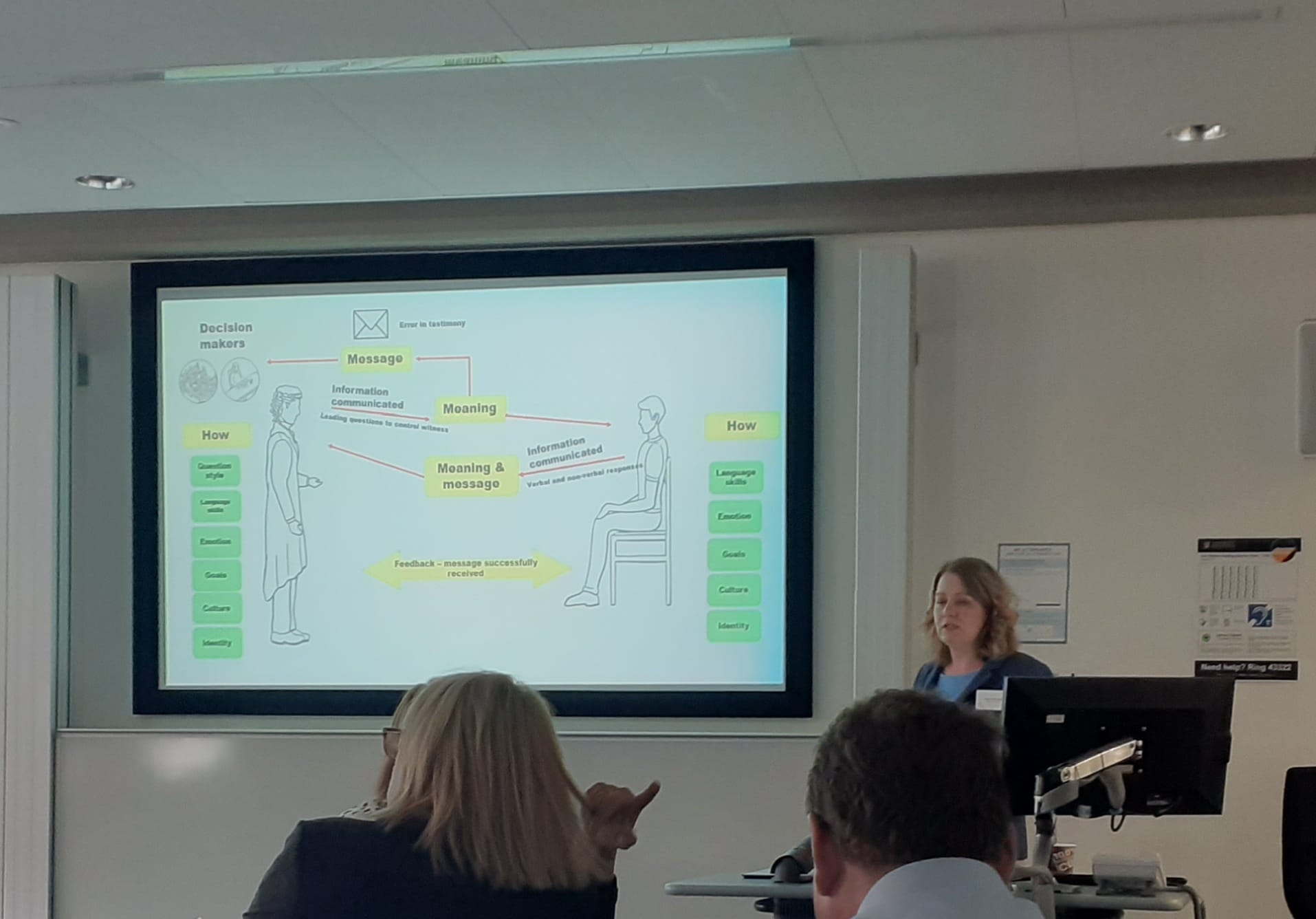
A lecturer in Intellectual Disability, Morrison also works as a Registered Intermediary in Northern Ireland. Her presentation analysed the communication ‘exchange’ between a prosecution barrister and a vulnerable defendant with intellectual disability, concluding that this communication could not, in fact, be called an exchange, due to the one-way, leading, adversarial questioning process, heavily steered by counsel and governed by the many unspoken power dynamics at play in the courtroom.

Morrison highlighted that the “rules of advocacy” are to “lead and tell – don’t ask questions”, in order to control the witness. She drew attention to a range of power disparities, from small physical examples (such as advocates standing to cross-examine a seated witness), to larger, more global differences, such as the often contrasting educational and cultural backgrounds of advocate and witness.

Most importantly, she highlighted that, while a defendant with an intellectual disability is likely to be wholly unfamiliar with complex courtroom communication and customs (and likely to have communication difficulties in everyday life), advocates have trained and practiced for many years to become expert court communicators. These courtroom expertise mean that, while counsel may put a ‘question’ (or, indeed, a statement) to a defendant, this question is in fact a message to the decisions-makers in the case (judge or jury). The true purpose of this ‘non-question’ is likely to be unclear to the defendant (e.g., drawing the jury’s attention to a discrepancy in their testimony).

The talk went on to unpack a range of commonly used cross-examination question styles which lead witnesses, and can prove particularly problematic when used with defendants who have an intellectual disability, due to the increased likelihood of suggestibility and poorer communication skills. Morrison noted, however, that “It’s not [just] a matter of question style – that’s just one factor”. This final point is a very helpful and deceptively simple observation, which can get lost once we, as intermediaries (and other professionals), begin to experience the courtroom environment as ‘everyday’.


“Missing the Signs”: A Legal-Ethical Analysis of ‘Good’ Lawyering for the Neurodivergent Accused – Tom Smith

Tom Smith (Associate Professor in Law, University of West England) explored the concept of ‘good lawyering’ for the neurodivergent accused, finding that lawyers are “obligated to ensure being neurodivergent is not a disadvantage” in the Criminal Justice System. His research sets out principles for good lawyering for neurodivergent clients, including:

  • The ability to recognise neurodivergence.
  • Understanding the communication differences and difficulties a wide spectrum of neurodivergent people may have.
  • The ability to responsively adapt their practice in order to communicate effectively with their neurodivergent client.
  • Understanding the available adaptations and services which may support the effective participation of a neurodivergent defendant.
  • Understanding that the police and courts may not implement the necessary adaptations an adjustments.
  • Proactively acting to implement adjustments, when other bodies do not do so, to ensure neurodivergent clients are not disadvantaged in the CJS.

Cross-Examination Compared: The experiences of vulnerable defendant and non-defendant witnesses – Jonathan Doak, Debbie Cooper, Candida Saunders & David Wright

This talk identified a hierarchy of ‘deservingness’ when it came to the outlook of legal professionals regarding support and adaptations for witnesses during cross-examination.

MOST DESERVING
– Child Witnesses
– Vulnerable Adult Witnesses
– Vulnerable Adult Defendants
LEAST DESERVING

The study found that this hierarchy results in “clear distinctions in approach”, such as limited intermediary support for vulnerable adult defendants and limited use of Ground Rules Hearings for these individuals.

This research surveyed many legal practitioners in the criminal justice system, who contributed interesting insights on the topic, including:

  • “Defendants do not get the same treatment as complainants, regardless of their need”
  • “As a [legal] practitioner, the culture […] is really very different and very far behind the way that we treat witnesses”.

The research also explored the evolving role of the intermediary when working with a vulnerable defendant, which is moving away from an “interpreter” model to a “facilitator” model, as a secure understanding of the proceedings in their entirety is essential to ensuring a defendant’s effective participation in trial. One legal professional commented, “How [is the defendant] going to answer questions about a case where he hasn’t understood what the prosecution evidence is?”

The study posited that some of the disparities between the treatment of vulnerable non-defendant and defendant witnesses boiled down to financial concerns. It also considered approaches taken in other jurisdictions. For example, “Northern Ireland has a much better model of practice. The identification of vulnerable suspects is much better. Because it’s a small jurisdiction, the intermediaries know each other, they know judges, there’s more bottom up activity”. 

The authors commented that, in Northern Ireland, an intermediary service was more recently implemented and, when it was, “There was a real sense of, ‘fairness demands that intermediaries should be available for defendants and witnesses’”. 


An Intermediary, a Defendant with Autism and Cross-Examination: A Novel Australian Case Study – Rukiya Stein

Stein is an intermediary working in Australian courts. After assisting a defendant with autism during his evidence, she requested court transcripts and analysed the interaction, exploring when she intervened, when she did not intervene, complex question types put to the defendant and simple question types asked of him. The judge did not grant permission for Stein to review the questions in advance of the defendant’s evidence.

One of the most common complex question types put to the defendant was interrogative statements. The cross-examination also featured low-frequency vocabulary and tag questions. Stein found that her level of intervention was relatively low, but remarked, “There’s a balance you have to strike as intermediaries, you can’t intervene for every question, you can get into trouble for that”, adding that the defendant was often able to indicate when he had not correctly understood the question.


The Use of Intermediaries (Communication Specialists) at Parole Board Oral Hearings in England and WalesBrendan O’Mahony, Becky Milne, Kevin Smith

O’Mahony is a parole board member, psychologist and intermediary for both witnesses and defendants in the criminal justice system. In this presentation, he explored the need for intermediary assistance in parole hearings and parole board attitudes to both communication needs and future possible intermediary usage.

The presentation reported that 18,248 cases were referred to the parole board in one recent year, of which 7,281 went to oral hearings, resulting in hundreds of parole hearings every month. O’Mahony reflected on the high prevalence of speech, language and communication needs (SLCN) within prisons, noting that, as a result, many prisoners attending parole hearings were likely to have SLCN which may impact their ability to participate effectively.

39 parole board members were surveyed as part of this research. The vast majority had attended a hearing where they felt the prisoner required communication support. However, none had attended a hearing involving an intermediary. O’Mahony explained that precise figures regarding intermediary assistance at parole hearings was difficult to find (as this was not routinely recorded), but the study was able to find evidence of intermediary usage in just 5-6 cases in total (over a number of years).


Effective Participation means Early Participation: The Case for Intermediary Assistance at the Investigative stage – John Taggart

Taggart’s ongoing project makes the case for intermediary assistance at the investigative stage (e.g., during police interviews). Hailing from Northern Ireland, where the more recently implemented intermediary scheme has included assistance in custody from the outset, Taggart suggested that, in England and Wales, “We’ve neglected police custody when we talk about participatory rights”.

The presentation highlighted the prevalence of communication difficulties in the criminal justice system, and sought to unpack the slippery issue of what ‘effective participation’ really means. While sources like SC v UK (2005) 40 EHRR 10 find that this requires a “broad understanding of the nature of the process” and “the general thrust” of what is said in court, other sources, like Owusu-Bempah (2018), conclude that it requires courts to reach the higher bar of “informed defence participation”.

Taggart also touched upon a difficult question which may arise in custody settings: When is someone vulnerable enough to need an Appropriate Adult? And then, when are they so vulnerable that they need an intermediary?


Identifying the need for and obtaining appropriate adults (case study, interviews and statistical review) – Jennifer Holmes & Harriet Pierpoint

Dr Jennifer Holmes and Professor Harriet Pierpoint spoke about their respective research and the resulting insights into the identification of vulnerability in police stations, and how appropriate adults are obtained for police interviews.

At the outset of their presentation, Pierpoint explained that the responsibility for identifying vulnerability before a police interview is dependent on the situation. In the case of a police suspect interview where the person is under arrest, it is the custody sergeant’s responsibility, whereas in a voluntary interview, it is the responsibility of the interviewing officer. In the case of suspects under the age of 18, an appropriate adult is mandatory during interviews.

As part of Holmes’ recent research, she reviewed the police suspect interviews and custody records for 27 vulnerable suspects, across 3 police forces. This was then followed by semi-structured interviews with police officers, appropriate adults and legal advisors, exploring the decision-making processes than had taken place when interacting with these vulnerable suspects.

Holmes found that, although suspects under 18 all received an AA, a third of the vulnerable suspects in her sample did not. This was despite the custody records of most of that third making reference to factors likely to render a person vulnerable, such as mental health conditions.

To offer a wider perspective, Pierpoint’s ongoing work involved reviewing statistics obtained via freedom of information requests from more than 40 UK police forces, regarding the provision of AAs and the use of pre-interview assessments to identify vulnerability. Pierpoint found that not all under 18s were receiving appropriate adults. The use of these pre-assessments in voluntary interviews varied greatly between forces, from 0% to 24% across different regions. The tools used to assess for vulnerability were also not standardised across the country, with different forces using different assessments.

Holmes’ interviews highlighted great variation in the way that AAs (appropriate adults) were obtained by the police. In one interview, a detective said, “We just stick to ones that we know, really, and we just call them up on a mobile and say ‘Oh, are you free?”, whilst another reported that a preferred AA’s directed phone number was displayed in the police station. Holmes’ highlighted the concerns this raised about the close working relationship between the detectives and the AA, and the impact on the AAs role as an independent safeguard.


If you’d like to learn more about any of the research above in more detail, extended abstracts will be published on a rolling basis on the Defending Vulnerability blog (which is great source for research going on in this area). You can also check out the work of many of the speakers via their Twitter feeds (linked in each talk title). 

Rebecca (intermediary) outside Newday Christian Youth Festival her arms are outstretched in front of a big tent and she is smiling.

Rebecca Volunteers at Newday Christian Youth Festival

Rebecca (intermediary) outside Newday Christian Youth Festival her arms are outstretched in front of a big tent and she is smiling.

A big well done to intermediary, Rebecca, for her (almost certainly exhausting!) work as a Youth Leader at Newday Christian Youth Festival. Each year, Communicourt staff can take up to two paid volunteering days to support causes they are passionate about. Here’s what she got up to…

“This summer, I had the immense privilege of serving my youth group at “Newday”, one of the largest Christian Youth Festivals in England! The (very wet and windy!) week saw over 8,000 teens come together at the Norfolk Show Ground for a week of camping, worship, and biblical teaching. As a 12-14s youth leader, I had the joy of joining our young people each day at their various meetings, hanging out in the afternoons drinking the best milkshakes, and exploring the word and their faith with them. The week brings up many issues and difficulties, but as leaders we are there to support them pastorally, safeguard our teens, and offer unconditional support. Being a leader can be tough, but seeing the growth of our amazing young people makes every difficult moment worth it!

Despite the awful weather, I had an amazing time working with our incredible young people and am so thankful for the chance to be with them, answering all kinds of questions from the everyday to the big life questions. Whilst my fellow leaders may have heard me say “I hate camping” 10,000 times a day, I am already counting down the days for next year!”


Interested in working as an intermediary? Learn more about staff benefits (including Volunteering Days) and the intermediary role here.

Foetal Alcohol Spectrum Disorder, Communication & the Courts

Purple text on plain backround reading: September is FASD Awareness Month

September is FASD Awareness Month, dedicated to raising awareness around Foetal Alcohol Spectrum Disorder and the range of symptoms that people with Foetal Alcohol Spectrum Disorder can experience. The event also celebrates the achievements of people with FASD across the UK.

The National Organisation for FASD are also working with FASD UK Alliance to promote the hashtag #FASDGiveMe5: “The hashtag is designed to represent taking 5 for FASD, whether that’s taking 5 minutes to explain FASD to someone new, taking the time to learn 5 new things about FASD, or giving someone with FASD a high-five to celebrate their achievements!”

To mark the event, we’ve compiled some information about FASD, its impact on communication, its possible impacts for court users and some strategies which legal professionals can implement to support the participation of a court user with FASD…

What is Foetal Alcohol Spectrum Disorder?

Foetal Alcohol Spectrum Disorder (FASD) is an umbrella term for a range of physical, cognitive and behavioural disorders caused when someone has been exposed to alcohol before birth. As babies cannot process alcohol well, it can stay in their body for a long time and can cause damage to their brain, body, and affect their development.

FASD is a brain-based disorder and can cause a range of intellectual and behavioural differences, which may appear at any time during childhood and can be life-long. This diagnosis affects approximately 1.8% – 3.6% of the population.

How can FASD affect people?

The symptoms and their severity can depend on how often and how much alcohol was consumed during pregnancy, and the stage of development the foetus was at. It can also depend on other factors, such as the pregnant persons’ stress levels, nutrition, environmental influences and genetics. Both the pregnant person and foetus’ abilities to break down alcohol can also impact symptoms. Everyone with Foetal Alcohol Spectrum Disorder is affected differently.

A review of existing literature (Centre for Addiction and Mental Health, 2016) found that there are more than 400 conditions that can co-occur with Foetal Alcohol Spectrum Disorder. This multifaceted spectrum of disorders was described as “affecting nearly every system in the body”. Some of these conditions are caused by alcohol exposure, such as developmental and cognitive problems, however, some do not have a direct cause and effect link.

Foetal Alcohol Spectrum Disorder can cause problems with:

  • Movement, balance, vision and hearing
  • Learning – For example, problems with thinking, concentration and memory
  • Managing emotions and developing social skills
  • Hyperactivity and impulse control
  • Communication – For example, difficulties with speech
  • Processing information
  • Following instructions

Foetal Alcohol Spectrum Disorder may also cause physical symptoms. These may look less distinctive in adults then children. Physical effects that can last into adulthood include:

  • Issues with joints, muscles, bones and organs (such as the kidneys and heart)
  • Short stature
  • Small head size
  • Differences in facial features (only present in 10% of Foetal Alcohol Spectrum Disorder cases).
  • Reduced brain size

People with Foetal Alcohol Spectrum Disorder can also have multiple co-occurring diagnoses. Studies into Foetal Alcohol Spectrum Disorder populations have found higher rates of:

  • Mental health issues
  • Psychological disorders
  • Autism
  • Attention Deficit Hyperactivity Disorder (ADHD).

Many people with Foetal Alcohol Spectrum Disorder go undiagnosed. It may not be detected at birth and can become more apparent later in life. It can lead individuals to have difficulties at school, mental health issues, legal issues and difficulties around independence and employment. Early diagnosis can be very important to support people with FASD to build appropriate support and strategies. It is important to note that, although some people with FASD face considerable difficulties and barriers to participation in important areas of life, many others have many strengths and lead successful lives with professional careers.

FASD and emotional management

Some of the early signs of prenatal alcohol exposure in children are intense negative moods, irritability, and sleep dysregulation.

Foetal Alcohol Spectrum Disorder can also impair a child’s executive functioning, which can impact behaviour regulation. Someone with poor behaviour regulation may have difficulties managing strong emotions and impulses. When they experience strong emotions, this can escalate quickly, and they may also be slow in calming down. Without appropriate support, children with these difficulties may be at risk of developing mental health difficulties, for example, anxiety disorders. It can also lead to them experiencing social difficulties.

Children with Foetal Alcohol Spectrum disorders may have a developmental delay in their understanding of emotions. A reduced emotional understanding can cause poor awareness of how their emotions and behaviours affect others. They can also struggle to understand the consequences of their actions. They can have difficulties with impulse control, emotional regulation and social skills.

Adults who were diagnosed with Foetal Alcohol Spectrum Disorder later in their life may be more likely to have difficulties with their emotional regulation. Teenagers and adults are at a higher risk of getting in trouble with the police and becoming involved with the justice system. This is due to difficulties managing their emotions, anticipating consequences, as well as understanding the motives of others.

Supporting people with FASD in legal proceedings

Professionals working within the courts may come into contact with people with Foetal Alcohol Spectrum Disorder, so it is important to look at what we can do to support people who may be experiencing difficulties with participation which arise from this diagnosis. In court, the condition may affect the court user’s ability to understand and effectively participate in all elements of their court proceedings. This could result in difficulties with:

  • Maintaining concentration in the courtroom
  • Understanding some of the ‘legal jargon’ used within court
  • Providing clear and detailed instructions to counsel

Difficulties like this can make the court process more challenging, and some individuals may need additional support to participate effectively. Although every person with Foetal Alcohol Spectrum Disorder presents differently, there are some general strategies and adaptations which may assist:

  • Speak slowly and clearly: This will ensure that they have time to process the information and that it is presented in the clearest way for them to understand.
  • Provide regular breaks: Due to possible difficulties with concentration, it will be important to offer or implement regular breaks to allow adequate rest time from the proceedings to support attention.
  • Use visual aids: To help with processing lots of verbal information or more complex concepts – to learn more about using visual aids, check out our free ‘How To’ guide on The Access Brief.
  • Break information down: If information is presented in short ‘chunks’, it will be more manageable to process and retain.
  • Check understanding: This can be done by asking specific comprehension-checking questions. For example, rather than asking, “Do you understand?” ask, “What did the social worker say about X?”. To learn more about checking understanding, take a look at our free ‘How To’ guide on The Access Brief.
  • Ask follow up questions: Short, simple ‘wh’ style questions could help prompt the court user to add in further detail, if they are experiencing any expressive difficulties.


Further Reading

More information around Foetal Alcohol Spectrum Disorder can be found at:

https://nationalfasd.org.uk/

https://nationalfasd.org.uk/get-involved/international-fasd-day/

Sources

https://www.crisisprevention.com/Blog/help-someone-with-fetal-alcohol-spectrum-disorder

https://www.nhsaaa.net/media/8391/fasd_whateducatorsneedtoknow.pdf

https://www.nhsggc.org.uk/kids/health-a-z/fetal-alcohol-spectrum-disorder-fasd/overview/

Children with fetal alcohol spectrum disorders lag in emotional understanding : News Center (rochester.edu)

Over 400 conditions co-occur with Fetal Alcohol Spectrum Disorders, study finds: Most severe cases have high levels of hearing loss, impaired vision — ScienceDaily

FASD Characteristics | FASD Greater Manchester

Foetal alcohol spectrum disorder – NHS (www.nhs.uk)

3.-How-to-support-children-living-with-FASD_Final-1.pdf (d2p3kdr0nr4o3z.cloudfront.net)

untitled (researchgate.net)

https://omny.fm/shows/fasd-a-guide-for-speech-and-language-therapists

https://www.cdc.gov/ncbddd/fasd/secondary-conditions.html#:~:text=Common%20Mental%20Health%20Conditions,deficit%2Fhyperactivity%20disorder%20(ADHD)

https://www.camh.ca/-/media/files/pdfs—reports-and-books—research/comorbidity-of-fetal-alcohol-spectrum-disorder-a-systematic-review-and-meta-analysis.pdf

https://onlinelibrary.wiley.com/doi/10.1111/acer.14705

https://hub.salford.ac.uk/fasd/prevalence/

Foetal alcohol spectrum disorder – NHS (www.nhs.uk)

https://www.proofalliance.org/wp-content/uploads/2021/11/What-are-the-differences-between-FASD-and-autism.pdf

Freunscht, I. and Feldmann, R., 2010. Young adults with fetal alcohol syndrome (FAS): Social, emotional and occupational development. Klinische Pädiatrie, pp.33-37

Youth Mental HEalth Day logo

Youth Mental Health at Court for Youth Mental Health Day 2023

Youth Mental HEalth Day logo

by Anna Carter (intermediary)

Youth Mental Health Day aims to encourage understanding and discussion of mental health in young people. According to  , 4 in 10 young people experience mental health difficulties. At Communicourt, we frequently assist young people who are experiencing mental health difficulties whilst facing court proceedings. In this blog, we will look at how intermediaries can help young people throughout this process.

Court can be intimidating and overwhelming for any court user, due to unfamiliar court formalities, the complexities of legal proceedings, the potential consequences, and the often alien nature of the legal process to lay people.

The theme of this year’s Youth Mental Health Day is #BeBrave. There has been some and one should be careful about how they use the word ‘bravery’ in this context. We believe that asking for help is often not a matter of bravery. Many young people with mental health needs are brave every day, and some may not have important ‘tools’ required to ask for help, such as a safe environment in which to do so, the knowledge required to identify the help they need, and the communication skills to request it. They may not know who to ask, or how to ask. It should not be the sole responsibility of the young person to advocate for their own mental health needs. Young people require support from others (e.g., parents, school staff, healthcare professionals).


Youth mental health at court

Regardless of the theme, Young Mental Health Day encourages understanding and discussions around mental health in young people. To explore the experiences of young people with mental health difficulties, as well as strategies and adaptations which can assist them, I spoke to a number of court intermediaries about their work with young defendants.

*For anonymity, names and details have been changed.

Front of the Royal Courts of Justice in London

Case studies

Ellie

Ellie [an intermediary] worked with a young defendant who had mental health difficulties. He had a diagnosis of OCD [obsessive compulsive disorder] and the court agreed to many adjustments, raised by Ellie during a Ground Rules Hearing and in the initial intermediary report, which would help him participate in the court environment.

Strategies that helped him:

  • He was permitted to keep his jacket on to help support his emotional regulation.
  • His evidence was heard via a video link so he did not have to look at the complainant during evidence.
  • The intermediary was permitted to intervene during evidence if a question was too complex.
  • Frequent breaks were permitted, which included ‘rest time’ to support his emotional regulation, as well as ‘explanation time’ for his legal team and intermediary to explain key evidence.
  • Some of his support network attended court with him to offer emotional support.
  • The intermediary sat next to the defendant and provided real-time whispered explanations to ensure he was understanding the proceedings.

Theresa

Theresa [intermediary] worked with a young person at court. He didn’t have any diagnosed mental health conditions, but he was diagnosed with ADHD [attention deficit hyperactivity disorder]. He became extremely emotionally dysregulated during the court proceedings.

Some strategies that helped him included:

  • Lots of breaks. Periods of discussion in both the court and during legal conferences were kept short, so he did not become overloaded.
  • A Ground Rules Hearing was conducted, so all the court professionals were aware of his communication difficulties and strategies to assist.
  • He was permitted to leave the courtroom when he became emotionally dysregulated.
  • A support worker was permitted to sit next to him in court, along with the intermediary.

Alice

Alice [Intermediary] worked with a 16-year-old defendant. The defendant was indicted with some really serious charges, hence why he found himself in Crown Court, rather than in the more age-appropriate, Youth Court. The defendant had ADHD [attention deficit hyperactivity disorder], ASD [Autistic Spectrum Disorder] and high levels of anxiety. He presented as very fidgety and easily distracted. During conferences, he would become strongly focussed on matters he felt particularly anxious about. He told the intermediary that his mental health had suffered greatly due to the criminal justice process.

Alice recommended adaptations to the proceedings to help manage his high levels of anxiety and other difficulties affecting understanding and engagement, to ensure that the defendant was able to actively participate in his trial.

Some strategies which helped him were

  • The intermediary visited the defendant ahead of his trial. This allowed time for the intermediary to properly introduce herself and build rapport, ensuring they could work effectively together during his trial.
  • The intermediary fully explained her role and spoke to the defendant about different strategies which she may use at court to help him.
  • There were lots of breaks during the trial, which included time for rest and explanation.
  • The intermediary provided the defendant with a simplified order or proceedings. This ensured he knew what was coming and supported his overall understanding of the proceedings.
  • The intermediary gave the defendant a fidget object which helped him to both manage his anxiety and stay more attentive.
  • The intermediary provided the defendant with simple notes. This was to aid his understanding and retention of information in the court proceedings. Within these notes, the intermediary matched the defendant’s use of colloquial language to make the notes as easy as possible for him to understand.

 Caitlin

Caitlin [intermediary] assisted during a one-day full trial in Youth Court. The service user was 16 years old and was being trialled for drug dealing. The trial was heard by magistrates. Several strategies enabled him to participate to the best of his ability. These included:

  • The defendant was able to sit in the main body of the court, rather than in the dock.
  • There were regular breaks.
  • All court professionals were made aware of the intermediary report and recommendations within it.
  • The intermediary intervened during evidence to ensure the defendant understood the questions that were being put to him.

As you’ve read above, the criminal justice system is a challenging place for young people, and it is important they get the support they need. Below is a list of strategies which may help a young court user with mental health difficulties to participate in legal proceedings:

  • Create a less intimidating atmosphere. For example, counsel could remove wigs and gowns, first names could be used, and alternative seating arrangements could be implemented (e.g., seating all participants on the same level, or seating the defendant outside of the dock (if at Crown Court).
  • A conference room could be reserved, so the court user has a guaranteed private place to rest when not in the courtroom.
  • Strategies which reduce anxiety or assist the young person to better manage their mental health condition could be implemented. These are likely to be specific to the individual, and can be explored by the intermediary at the initial assessment stage. Strategies might include access to an emotional support animal, permission to wear a specific item during proceedings (e.g., We have assisted young autistic defendants who are better able to manage sensory sensitivities which would otherwise be emotionally dysregulating, by wearing ear defenders or a woolly hat).
  • Use simplified language and explain complex concepts and legal terminology. For example, when the young person is giving evidence, they could simply promise to tell the truth rather than giving a formal oath/affirmation. This can help someone better understand what they are promising to do which helps to reduce anxiety.
  • A screen or video link could be used when the young defendant is giving evidence.
  • Regular breaks will give the defendant time to rest and process the evidence. They also give the defendant time to ask any questions to their legal team or point out any of the evidence they want to challenge.

By implementing these measures, courts can help young people with mental health difficulties navigate the legal system in a more effective way. It’s important to bear in mind that this list is not exhaustive and every young person attending court is different. A person-centred approach, starting by exploring their communication profile and coping strategies is therefore really important.


Further reading

The Communicourt team recently attended the Vulnerable Accused conference at the University of Birmingham, where the participation of young defendants was a clear theme. Please find some interesting comments and research mentioned at this event below, for further reading:

Florence in front of a whiteboard which features a list of orders in care proceedings - she is explaining how to simplify these concepts.

Florence shares intermediary role with Social Work students

Intermediary & Team Leader, Florence, recently used one of her Volunteering Days to introduce the intermediary role to social work apprentice students at Liverpool John Moores University.

Florence in front of a whiteboard which features a list of orders in care proceedings - she is explaining how to simplify these concepts.

Florence shared a range of strategies to support service users with communication needs during legal proceedings, and gained a lot of insight from a social workers’ perspective, too. Including a fresh perspective on explaining concepts surrounding Parental Responsibility and Threshold to respondents in care proceedings.

A classroom from behind. Florence is leaning over the students and explaining things. On the whiteboard at the front is an example of an 'I need a break' card often used by intermediaires at court.

In the afternoon, the class attended a talk given by a judge at court. Florence found it very surreal to be in front of a judge with no laptop, no person to explain things to, with the opportunity just to listen. She even asked a question without saying ‘Your Honour’ first!

Here are some of the things the judge shared with the social work students, which really got Florence thinking:

  • He described court as a ‘space’ not a ‘place’. Especially after COVID-19, court is a state of mind.
  • He noted that court is all about the 3 Fs: Fairness, Finality, and Formality.
  • He said that when a case comes to court they will be sifted, and different judges will get given them depending on complexity and seriousness. He then said more private family cases go to magistrates- which was interesting considering how surprised I’d been to be in a public family case in front of magistrates only weeks earlier!
  • He told the students to consider the positives and negatives and give credit where it’s due e.g., he’d take a social worker’s recommendations more seriously if they could also talk about the good points, like contact.
  • In the morning I’d told the students that the threshold was the list of ‘worries’. In the afternoon the judge said it was ‘allegations’. I’d never really thought before about how we might protect our service users from the word ‘allegations’.
  • The judge talked about the times in court when he gets to officially adopt someone into a new family. Sadly, we only ever get to see the hearings where parents find out these orders would be made, I don’t often think about those lovely days where the children get to start a new life.
Watercolour speech bubble with a 'scales of justice' icon inside

Access To Justice Matters: Why we’re hosting a multi-disciplinary conference

Square, yellow banner for the Access to Justice Conference with a red door logo. The subheading of the conference is: The future of inclusion and special measures in the courts. Details: HAlf day conference. 3rd November 2023. Leeds and online. With the Communicourt and JUSTICE logos.

We have just released early bird tickets for Communicourt’s very first external conference: Access to Justice: The future of inclusion & special measures in the courts, held in partnership with UK law reform and human rights charity, JUSTICE. The half-day conference will take place on Friday 3 November in Leeds and a livestream is available for those who can’t make it in person.

We wanted to talk to you about why we think this event is necessary, and what we hope to achieve. Striving for ever-better access to justice for people with communication differences and difficulties is what drives Communicourt as an organisation. However, intermediaries are only one piece of the puzzle of achieving equal participation for all.

We recognise the limitations of our role within a much wider, complex system. We also recognise the importance of inter-disciplinary working to facilitate more effective participation, for court users with very diverse needs. In addition, there are many vulnerabilities which require accommodations and adjustments within the court process but may fall outside the purview of intermediary assistance.

Why JUSTICE?

JUSTICE logo (statue holding weighing balances) with text JUSTICE

We know legal professionals find themselves under increasing pressure in the court system and are always striving to do all they can for their clients. We invited JUSTICE to partner on this conference because we admire their considerable expertise and tireless work fighting for UK legal reform. They are absolutely the right partner for this event, and we are immensely proud and excited to be working with them.

Improving access without intermediaries

There are many reasons why an intermediary may not be allocated to assist a court user with a communication difference, communication difficulty or vulnerability. This might be due to resources, or time constraints. In these cases, counsel must juggle the considerable demands of representing their client, with monitoring and supporting their participation as far as possible.

Sharing the latest best practice with legal professionals is therefore (in our view) essential to improving access to justice in cases where intermediaries are not appointed. We believe that conferences like this present an excellent opportunity for sharing knowledge, which could help more court users who do not have access to an intermediary to participate more effectively in legal proceedings.

We want to spark conversation around inclusion, adaptations, adjustments and special measures, to keep these ‘tools’ firmly at the top of the agenda, whenever the court works with individuals who have communication needs or other vulnerabilities.

Sharing thinking

Nurturing inter-disciplinary understanding, collaboration and knowledge sharing is an essential part of making justice more accessible. From policy makers and judges, to academics, solicitors and intermediaries – the more communication between and awareness of intersecting roles, scopes, tools and best practice, the more effectively we can all accommodate communication needs and other vulnerabilities within the justice system.

Two thought bubbles in different watercolour colour schemes, overlapping with a lightbulb in the centre.

Among professionals working in the courtroom, there are many competing demands and priorities. For example, a judge is likely to prioritise overall case and time management more highly than an intermediary, who will prioritise adaptations which will assist their service user to participate as effectively as possible (such as breaks for further explanation and to support attention).

By the same token, a barrister may take a ‘bigger picture’ approach when considering the best approach to their client’s evidence, keeping the outcome of the case firmly in mind. They may, for example, feel strongly that live-link will reduce the impact of their client’s evidence upon a jury. As an impartial professional, an intermediary will focus on measures which will best enable their service user to understand questions put to them and to express themselves as effectively as possible. This may mean recommending remote participation (to better manage the impact of issues like anxiety, PTSD flashbacks, sensory sensitivities and other factors upon their communication).

Nurturing collaboration

The above examples of differing priorities highlight the importance of multi-disciplinary working, when tackling access to justice. Navigating these issues in order to collaboratively ensure effective participation depends on court professionals understanding the boundaries and demands of each other’s roles. Fostering greater communication across professions is a crucial step towards getting those delicate balances right.

Although not a training event, the Access to Justice conference seeks to bring together diverse professionals, allowing opportunities for interdisciplinary connection and learning.

Service user voices

We strive to facilitate equal access to justice for service users in courtrooms across England and Wales. It is their voices and experiences which continue to drive our work. Below you can read some of our service user courtroom experiences first-hand, which highlight why we do what we do, why access to justice matters, and why we hope to bring together a wide range of speakers and guests from across the justice system at the Access to Justice Conference, so we can each work more effectively, together, to achieve equal participation for all:

Watercolour speech bubble with a 'scales of justice' icon inside

“I don’t understand most of what they’re saying. I speak to [my solicitor]. When she asked me something, I said, ‘Don’t know, I’m going to put my trust in you, and you make the decision’. And with ADHD it’s really hard to make decisions. If you ask me, ‘Do you want tea or coffee?’, I’m blown”.

“Being closed in [the dock], I couldn’t hear what was being said and, if I do, what’s being said, it takes me a while to [hand gesture] absorb and understand what people are saying, maybe sometimes I won’t and the difficulty with that, sometimes I just say ‘yes’. And when you’ve got all those people watching you…”

“Yeah, that’s the problem as well because I have this thing [PTSD] sometimes when they’re talking, but, you know, my understanding and my mind goes somewhere else”.

Prevalence of communication difficulties & differences in the justice system

Although not an exhaustive list of diagnoses, differences and difficulties which may impact an individual’s ability to communication and participate effectively in legal proceedings, these statistics offer a glimpse into the prevalence of very varied communication needs at court (see references below).

ADHD (Attention Deficit Hyperactivity Disorder)

  • 26% of adult prisoners in Britain met the criteria for some form of ADHD (Young et al, 2015)
  • 96% of offenders with ADHD have co-occurring problems involving issues such as mood, anxiety, and conduct (Young and Cocallis, 2021)
  • 30% of young offenders have some form of ADHD, compared to 3-4% percent in the general population (Young et al, 2015 and National Institute for Health and Care Excellence, 2018)

Autism

  • 5-7% of people referred to liaison and diversion services by the courts are autistic (Criminal Justice Joint Inspection, 2021)
  • 19% of people in UK prisons have autistic indicators (Criminal Justice Joint Inspection, 2021)

Brain injury

  • 47% of adult men and 70% of male youths in UK prisons reported sustaining a head injury (Pitman et al, 2013)

Developmental Language Disorder (DLD)

  • Up to 60% of young people who commit crimes have DLD (Winstanley et al, 2020)
  • Young people with DLD are twice as likely to reoffend than those who do not have the condition (Winstanley et al, 2020)

Learning Disability

  • 5-10% of people who offend have a learning disability (Prison Reform Trust, 2017)
  • 25% of young people who offend have a very low IQ, below 70 (Prison Reform Trust, 2017)

Mental health difficulties

  • 25% of women and 15% of men in prison reported symptoms indicative of psychosis (Prison Reform Trust, 2017)
  • 21% of women in prison have PTSD (Facer-Irwin et al., 2014)
  • During family law proceedings, the mental health of women with domestic abuse-related PTSD often deteriorates (Douglas, 2017)
  • 49% of people in prison reported being at risk of anxiety or depression (Her Majesty’s Prison & Probation Service, 2017)
  • There is a higher prevalence of bipolar disorder in prison populations compared to the general population (Fovet et al, 2015)

Attend the Access to Justice Conference

We hope this article offers some insight into our motivations and goals for our very first external conference. To learn more about the conference and to book early bird tickets (available for a limited time only), please visit the Communicourt website. For further information, please contact events@communicourt.co.uk.

Red door logo with text: Book tickets (button)


References

Criminal Justice Joint Inspection (2021) Neurodiversity in the criminal justice system: A review of evidence, Accessed [online]: September 2022

Douglas H. (2017). Domestic and Family Violence, Mental Health and Well-Being, and Legal Engagement. Psychiatry, psychology, and law : an interdisciplinary journal of the Australian and New Zealand Association of Psychiatry, Psychology and Law, 25(3), 341–356.

Facer-Irwin E, Blackwood NJ, Bird A, Dickson H, McGlade D, Alves-Costa F, et al. (2019) PTSD in prison settings: A systematic review and meta-analysis of comorbid mental disorders and problematic behaviours.

Fovet, T., Geoffroy, P.A., Vaiva, Adins, C., Thomas, P., Amad, A. (2015) Individuals With Bipolar Disorder and Their Relationship With the Criminal Justice System: A Critical Review, Psychiatric Services: Volume 66, Issue 4.

Her Majesty’s Prison & Probation Service, NHS England and Public Health England, (2017) Mental health in prisons HC 42 SESSION 2017–2019. London: National Audit Office.

Johnson, R.D. et al. (2021). Health vulnerabilities of parents in care proceedings in Wales. London: Nuffield Family Justice Observatory.

National Institute for Health and Care Excellence, Guidance: Attention deficit hyperactivity disorder: diagnosis and management. 2018.

Pitman, I. , Haddlesey, C. and Fortescue, D. (2013), “The prevalence of traumatic brain injury among adult male offenders in the UK”, Disabilities Trust Website.

Prison Reform Trust (2017) Mental health, autism and learning disabilities in the criminal courts, Prison Reform Trust & Rethink Mental Illness

Winstanley, M., Webb, R. T., Conti-Ramsden, G. (2020) Developmental language disorders and risk of recidivism among young offenders. The Journal of Child Psychology & Psychiatry 62: 396-403.

Young S, Cocallis K. ADHD and offending. J Neural Transm (Vienna). 2021 Jul;128(7):1009-1019.

Young S, Moss D, Sedgwick O, Fridman M, Hodgkins P. A meta-analysis of the prevalence of attention deficit hyperactivity disorder in incarcerated populations. Psychol Med. 2015 Jan;45(2):247-58.

Speaker at Inclusioneers Conference on stage in red lighting

Communicourt at Inclusioneers Conference 2023

This week, Melissa (Assistant Lead Practitioner) and Rachel (Team Leader) attended the Inclusive Employers Inclusioneers Conference 2023, held at Chelsea FC’s Stamford Bridge.

The event was held to share best practice and bright ideas on topics including recruitment and positive action, hybrid working, racial equity, inclusion & diversity strategy, and staff networks. A keynote speech was delivered by LGBTQ+ voice, Nathaniel J Hall, an HIV activist, producer, writer and star of unmissable drama, It’s A Sin.  

Rachel was especially inspired by calls to “Make inclusion an everyday reality” within organisations. She explained, “We had a really enjoyable day listening to the fantastic speakers at the Inclusive Employers Inclusioneers Conference 2023 – from learning top tips for inclusive recruitment and flexible working to hearing about personal experiences in relation to racial equity and being a member of the LGBTQ+ community. Everyone’s ideas and stories were so inspirational, insightful, and we have definitely come away with more tools in our inclusion kitbag that we are looking forward to sharing with our colleagues”. 

Inclusion isn’t just important for our service users (who often require adaptations and adjustments to ensure they have equal access to justice). It’s also important for us as an organisation. We work with an incredibly diverse range of court users, and we strongly believe that this diversity should be reflected within Communicourt itself, to allow us to provide an ever-better informed and attuned service to people with communication needs.

Communicourt is always working to improve inclusion and diversity within the organisation, implementing recruitment policies to diversify our workforce, nurturing staff groups (including a Neurodiversity Network and team of Diversity Ambassadors), and amplifying diverse voices within the company, via internal platforms.

The Inclusioneers event has offered lots of food for thought and fuel for future developments, and we look forward to putting this learning into practice.

The words "My Intermediary Week" on a watercolour background

My Intermediary Week: Anna

My name is Anna and I’ve been an intermediary at Communicourt for two and a half years now (wow time flies!). I studied Psychology at university and, once I had finished my course I became an analyst – which I found very boring as I had to look at excel spreadsheets for hours on end! But it was in this job that I first heard about the role of an intermediary from one of my colleagues. I started to research the role and it really appealed to me. I’ve always been interested in court. My Granddad became a magistrate when he retired, and growing up, I always loved hearing his stories from the courtroom. However, I was never drawn to a career in law. So, when I heard about the role of an intermediary, I was very excited at the prospect.

My job as an intermediary is to assist individuals with communication difficulties going through court proceedings. This is usually in either the criminal or family court. In this blog post, I will take you through a recent week in my intermediary life! However, it’s important to remember that no two weeks are the same for an intermediary. Each new week brings new cases, new people and fresh chances to have a positive impact on an individual’s access to justice.


Monday

My week started with a remote family court case. Working from my home, I emailed the solicitor to try and arrange pre-hearing discussions so I could talk with the service user to introduce myself, build rapport and explore how we could communicate during the hearing.

Unfortunately, I did not get a response. Despite making lots of different phone calls, by 9:30 (when the court hearing was due to start) I still had not had any contact from the solicitor, nor received a link for the court hearing itself.

After continuously trying to make contact, I was finally sent the link to the hearing – well after court had already started! I joined mid-way through the hearing and made a note of what was said. After the hearing, I tried to arrange a post-hearing conference to explore the service user’s understanding of the hearing and to provide support with any areas of difficulty. Unfortunately, this was also not possible. I then updated the case notes so the next intermediary who works with this service user can check their understanding of the case.

This was a frustrating start to the week, as usually remote hearings are much more straightforward than this. In the majority of cases, contact numbers are available and it is straightforward to set up a pre- and post- hearing discussion. It is also very rare that an intermediary is only provided access to the hearing part-way through. Typically, at the outset of remote hearings, ground rules are discussed with the intermediary, so everyone is appraised of any needs the service user may have and knows how remote intermediary assistance will be managed.

Equally, by the time most remote hearings start, I’ve usually had a chance to speak with the service user. At this stage, I typically explore the best options for providing remote assistance (either through an open phone line during the hearing, by using a CVP intermediary room or by text messaging during the hearing – all dependant on the technology available to the service user, and their level of literacy). In most cases, by the time hearings commence, myself and the service user will have exchanged numbers and set up a method of communication, to ensure they have access to simplification, recaps and other assistance. Today, things didn’t go so smoothly, but it can only get better from here!


Tuesday

Tuesday was supposed to be a day to catch up on admin work but, at approximately 10:30am, I received a call from the Communicourt bookings team asking me to cover a last-minute family court hearing. To make matters more interesting, the person I would be assisting needed some further assessment to gain a full understanding of their communication abilities.

By 11am I was on a Zoom call with the service user, conducting some further assessment tasks which looked at some areas of communication that had not been previously assessed. After this, I gave their barrister a quick call to update him on the new findings, before entering the remote family court case.

The court hearing was about ensuring the individual would be able to participate in the upcoming in-person hearing effectively. I addressed the judge and gave some recommendations to the court about what would help this person participate to the best of their ability. The judge agreed to all of my recommendations which included:

  • Advocates for all parties to send their proposed questions to the intermediary in advance of the service user’s evidence (to allow the intermediary to check the questions are worded and structured in a way that will be best understood by the service user – allowing them to give their best evidence).

  • Permission for the service user to remain in their usual seat in the body of the court during their evidence (due to high levels of anxiety).

  • Only one advocate to ask questions on behalf of all parties (to help minimise the impact of anxiety upon their ability to process questions and formulate responses).

  • Frequent breaks (with recommended timings).

  • Permission for the service user to make use of an attention aid (tangle toy) at court.

Wednesday

On Wednesday I had a break from the family court and instead attended a conference with a young person facing criminal proceedings. They were someone I have assisted before, so I already knew a bit about their communication profile, but I reminded myself of their communication needs by reviewing their intermediary report and cognitive report in advance. I also reminded myself of the case by reading the intermediary case notes.

It was then time to attend the conference, after a short walk over to the solicitor’s office, I helped the service user to understand the process of a trial by creating a simple court diagram showing who will be sat where and by explaining the job of each person in the room. I also used a visual aid to help the service user decide whether he will be plead ‘guilty’ or ‘not guilty’ by using a flowchart to explain each option and the potential outcomes of both. Throughout our meeting, I intervened to check the service user’s understanding and simplified any low frequency language his barrister used, this helped the service user give clear instructions and follow what was being said.

Ficticious example only, does not include key information (e.g., impact on sentence)

Thursday

On Thursday I attended another conference, this time with someone who had a very important family court hearing coming up. Again, this was a service user I had previously worked with and so I already had an understanding of their communication abilities, but it is still important to frequently remind myself of the individual’s case and communication profile. I re-read the intermediary report and case notes in advance of the meeting.

During the meeting, I assisted the solicitor to ask questions in a way that made sense to the individual and allowed him to give clear responses.

For example, the solicitor asked, “So you don’t agree with what the local authority want?”. This is a statement-style question which invites agreement (making it harder for more suggestible people to contradict). It also included a negative (“don’t”), which can prompt unclear answers.

I therefore asked the service user, “What do social services want?” and, “What do you want?”. This enabled me to check the service user understood what other parties in the case were asking for, and also enabled the service user to provide clear instructions.

We then spoke about what sort of recommendations could be made in court to aid the service user’s participation in the upcoming hearing. For example, asking the court to sit for shorter days, due to the service user’s difficulties with concentration, and asking for regular breaks, so the intermediary can check understanding and allow time for the service user to ask any questions.


Friday

Friday brings yet another new court case to my calendar. I assisted a young person who I have worked with numerous times before. Today was an in-person family court hearing, which involved taking an early morning train to court. Whilst on the train, I read through the report and case notes to remind myself of exactly what sort of support was required.

When I arrived in court, I met the service user and barrister, and we found a quiet space to have pre-hearing discussions. During this conversation, I assisted the service user’s understanding by explaining low frequency vocabulary (less commonly used words) and asking questions to check they had understood what was being said.

For example, when the barrister said, “The local authority’s position is ambiguous right now” I explained that meant, “The social workers are not being clear about what they want”.

At the end of the conference, in order to check the service user’s understanding, I asked specific questions such as, “What does *NAME* want to happen?” and, “Why are you having an assessment?”. These questions enabled me to check that the service user had gained a clear understanding of what had been discussed.

After a break, it was then time to enter the courtroom. I sat with the service user and whispered real time explanations to them throughout the proceedings. For example, when one of the barrister’s said *NAME’s* statement has been “filed and served”, I whispered to the service user, “The court have got a copy of *NAME’s* statement”. I also drew a simple line drawing of the courtroom to show who was sitting where and what their job was. This assisted the service user to understand who was speaking on behalf of who.

Simple line drawing of a family courtroom, labelled with roles of different parties and professionals.
Ficticious example (does not include names)

At one juncture, they made an important comment to me, so I passed a note forward to the barrister. The barrister then addressed the judge on this point. After the hearing, we had a quick conversation with counsel to go over what was said in court. I checked the service user had understood everything by asking focussed questions and asking them to explain what had happened in court in their own words.

It was then time to go home. On my train home I completed some admin tasks and wrote up the case notes from the day.


Working as a Communicourt intermediary requires resilience and adaptability. It is an extremely rewarding role, where every day is interesting and new. The job is unpredictable and unforeseen circumstances arise all the time, but every day brings new stories, unexpected twists, new challenges and the chance to make a positive difference to people facing some of the most difficult moments of their lives.  

The Access Brief logo

If you would like to learn more about the intermediary role at different stages of family and criminal proceedings, visit The Access Brief. A growing library of free resources developed for legal professionals working with clients who have communication needs, including guides to working with clients who have a range of common conditions which impact communication.

A line drawing of the Glastonbury Pyramid stage surrounded by confetti with bright letters spelling out Tourette's on the Pyramid Stage

Tourette’s on the Pyramid Stage

As Frances Ryan for the Guardian writes, the crowd’s support for Lewis Capaldi during a performance affected by tics was “the sort of display of communal spirit that didn’t just feel like Glastonbury at its best, but humankind generally”.

Her article celebrates the response of festival-goers, who cheered on the singer and sang when he could not, as his vocal performance was increasingly impacted by Tourette’s (which includes involuntary movements and tics affecting his breathing).

However, Ryan’s article also highlights the rarity of visible disability – particularly on stages as prestigious and global as Glastonbury. On this unusual occasion, a person experiencing communication barriers was publicly celebrated and supported – not out of pity, but through acceptance. The crowd acknowledged Capaldi’s difficulties and worked collaboratively and responsively with him, to triumphantly finish the set. This wasn’t about bleeding hearts or saviour complexes. This was about wanting Capaldi there, wanting to be part of a moment with him, and working towards a successful communication exchange in an act of mass collaboration.

Here are the voices of some people with Tourette’s in response to the performance:

The disparity between this one, magic moment and society’s typical responses to disability (including wrong-footed, well-meaning ones) is stark. In Capaldi’s statement following the festival, he said he was “annoyed” with himself, perhaps a reflection of the shame some people with Tourette’s and many others are made to feel, when they are unable to mask their differences – an often exhausting task, upon which their equal treatment can feel dependent.

Making communication work

Capaldi’s performance highlighted that communication is a two-way (or in this case a 100,001 way) exchange, which both sides of the ‘conversation’ have a duty to make work. In many ways, the Glastonbury set illustrates best practice when working with a court user (or communicating with anyone, in any context) who has a communication difference or difficulty.

Communication is an exchange, which all participants have a duty to facilitate as effectively as possible. Part of successful exchanges involves understanding each participants’ communication strengths and needs and implementing adaptations to overcome any barriers. This doesn’t mean frustratedly ending an exchange because it isn’t working, or assuming that what somebody is trying to communicate isn’t of value.

Successful communication can look different for everyone, but collaborative, person-centred approaches are often the key. This is how the crowd approached their exchange with Capaldi. Listening to what he had to say about the difficulties he was experiencing, responding to his cues and providing the support required to facilitate a successful interaction.

Tourette’s & communication in legal proceedings

In a recent Communicourt blog for Tourette’s Action Week, we explored the condition (which affects an estimated 1% of people in the UK) and shared tips and strategies for legal professionals working with a client who has Tourette’s.

Many of these strategies focused on raising communication partners’ awareness and understanding (for example, addressing a jury to explain a defendant’s Tourette’s presentation and that this must not influence their verdict) and working collaboratively with the court user to implement effective communication strategies (for example, by asking what helps them).

Concepts like “understanding” and “awareness” may sound fluffy, but they can and should have concrete outcomes. For example, understanding that some people prefer to suppress tics (which can result in fatigue and impair attention) means that courts can take measures like implementing more frequent breaks, providing written summaries (in case evidence is missed through loss of attention) or working to ensure the individual feels more comfortable to tic freely during proceedings.

Meanwhile, being aware that anxiety and stress can exacerbate Tourette’s symptoms can prompt the court to explore special measures to help manage these feelings, like permitting remote attendance or the use of a screen during the court user’s evidence, which can assist the individual to give their best, clearest and most reliable evidence.

However, when we start to consider a list of possible ‘strategies’, it’s easy to lose sight of the person at the centre of these measures. Adaptations must be made on a person-by-person basis, and informed by the individual they are intended to assist.

A group of people reading a book called "Tourette's 101". Away from them, a women is raising her hand to get their attention and saying, "But I need..."

For example, while some people may prefer for their tics to be ignored in conversation, others will feel more comfortable with an alternative approach. While some people will feel less anxious engaging in proceedings remotely, for others, video calls can be particularly anxiety inducing. Instead of following a ‘tick-list’ when communicating with a person who has a communication difference or difficulty, actively seeking and integrating individual communication preferences is essential.

These principles don’t just apply when communicating with a person who has Tourette’s Syndrome, or when cheering on your favourite musician on the Pyramid Stage. They should be at the heart of every interaction. When we take a flexible, responsive, informed and person-centred approach to communication, we help ensure everyone can be part of the conversation.


The Access Brief logo


Learn more about court communication from experienced court intermediaries on The Access Brief. A growing library of free resources developed for legal professionals working with clients who have communication needs.

Congratulations to the Northern Law Awards Winners!

We were very proud to sponsor, judge and attend the Northern Law Awards last night, celebrating the expertise and dedication of legal teams in the North of England. The Communicourt team had a wonderful evening, meeting and applauding outstanding legal practitioners at the awards dinner in Newcastle.

Alongside other judges, we were tasked with the difficult job of selecting the winner of the “Family Law Team of the Year” Award. We met with delegates from the four finalists, Cygnet Family LawMajor Family Law, Sintons LLP and Tilly Bailey & Irvine LLP and were asked to select the team who best demonstrated legal expertise, appreciation by clients, client service excellence, project management skills and team working. It was an extremely difficult task, as all four finalists clearly embodied all of these qualities and achievements.

However, after careful consideration and deliberation, Communicourt’s managing director, William Scrimshire, was delighted to present Cygnet Family Law with the Family Law Team of the Year Award, at the awards ceremony held at the Hilton Newcastle Gateshead. We found the Cygnet team to be “an outstanding team providing outstanding expertise”, and were very pleased to be able to recognise their exceptional work. Congratulations to the whole team!

Our intermediaries work alongside outstanding family lawyers across the North of England (and beyond) every day, so it was a real pleasure to take part in recognising the skill, empathy and commitment of legal professionals who we know consistently go above and beyond for their clients, particularly those with communication difficulties and other vulnerabilities.

Were you paying attention?

Did you notice the fidget aids hidden in our Communicourt gift bags on your party’s table? These resources can assist many different people to regulate their emotions and attention more effectively. Anecdotally, intermediaries see this in the courtroom every day, and there is a growing body of research which points to their effectiveness:

Intermediaries often offer court users attention aids during hearings and meetings. They can be particularly helpful for people with ADHD, anxiety and PTSD, but many others also find them useful, including some autistic court users and neurotypical people. If you happen to be caught without a specific fidget aid, there are lots of alternatives that can be implemented which have a similar effect, such as encouraging a client to doodle, or providing a simple piece of Blu Tack or a hairband.

Thank you & congratulations

Our sincere thanks to the Northern Law Awards, it’s been a pleasure to sponsor the event and to celebrate many of the dedicated legal professionals our intermediaries work alongside. Finally, a huge congratulations to all of the finalists and winners, including newly crowned Family Law Team of the Year, Cygnet Health!